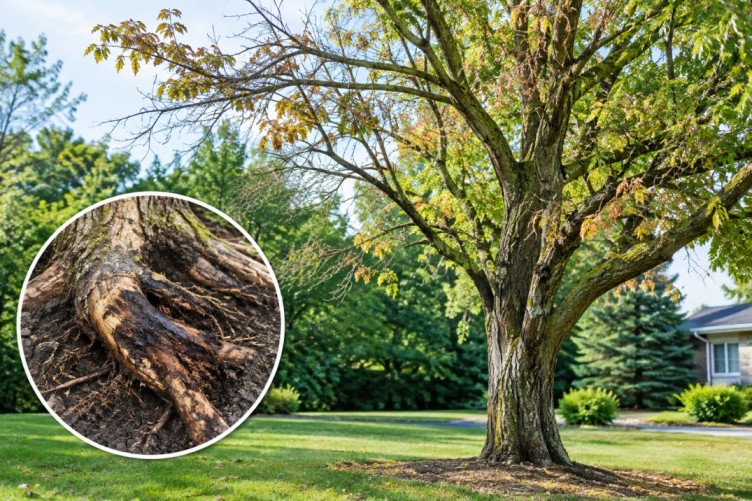
If you’ve noticed root rot in trees on your property (thinner leaves, a slight lean, or mushrooms popping up near the base) it could be the hidden cause behind a tree that looks weaker than it used to. Left untreated, a tree with root rot can become a serious safety hazard, especially during New Brunswick’s windy winters and spring storms. Here’s how to spot the warning signs and know when it’s time to call in our team for professional tree removal in Fredericton.
Key Takeaways
- Root rot is a fungal disease that destroys a tree’s root system, often before any visible symptoms appear above ground.
- Common warning signs include mushrooms at the base, a new lean, thinning leaves, soft bark, and soil heaving near the trunk.
- According to the Canadian Forest Service, root and butt rot fungi are among the most common causes of structural tree failure in eastern Canada.
- Early-stage root rot can sometimes be managed, but advanced cases usually require professional removal.
- A certified arborist can assess root stability and tell you honestly whether a tree can be saved or needs to come down.
What Is Root Rot?
Root rot is a fungal disease that attacks a tree’s root system, slowly destroying the roots that anchor the tree and supply it with water and nutrients. It’s usually caused by prolonged excess moisture around the roots, poor soil drainage, construction damage, or fungal pathogens such as Armillaria (commonly known as honey fungus) already present in the soil.
Unlike diseases that affect leaves or bark first, root rot develops underground, out of sight. By the time visible symptoms show up above ground, the root system is often already significantly compromised. This is what makes root rot particularly dangerous. A tree can look mostly healthy while its structural support has quietly failed below the surface.
In one Fredericton yard we assessed last fall, a mature maple looked healthy from the street, full canopy, no obvious dead branches. But a soil probe near the base revealed the root flare was already soft and spongy from advanced root decay. The homeowner had no idea anything was wrong until we pointed it out during a routine trimming visit. That tree came down two weeks later, well before the first winter windstorm.
Common Signs Your Tree May Have Root Rot
Not every warning sign appears at once, and root rot can progress differently depending on the tree species, soil conditions, and how long the fungus has been active. Some trees show clear above-ground symptoms early on, while others hide the damage for years before a sudden failure. That’s why it helps to know the full range of signs rather than relying on just one indicator. Below are the most common warning signs our team looks for during on-site assessments across Fredericton properties.
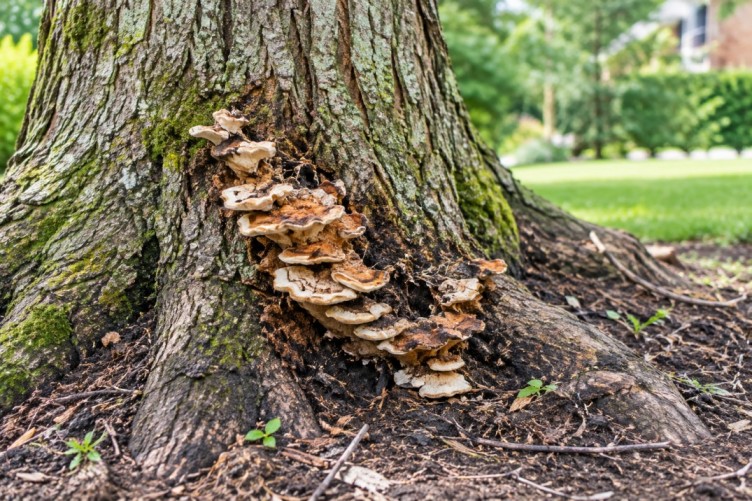
1. Mushrooms or Fungal Growth at the Base
One of the clearest signs of root rot is the appearance of mushrooms, conks, or shelf-like fungi growing around the trunk or in the nearby soil. This fungal growth feeds on decaying wood inside the root system, and its presence almost always means decay is already underway. Honey fungus (Armillaria species) is one of the most common culprits we see on hardwoods in the Fredericton area.
2. Thinning or Discolored Leaves
A tree fighting root rot often can’t draw up enough water and nutrients through its damaged roots. This shows up as sparse foliage, yellowing leaves, smaller than normal leaves, or branches that leaf out later than the rest of the tree in spring.
3. A Noticeable Lean
If a tree that was previously upright starts leaning, even slightly, this can mean the root system is no longer holding it firmly in place. A new or worsening lean should always be checked by a professional, since it often signals the root plate is failing.
4. Soft, Spongy, or Cracked Bark Near the Base
Bark that feels soft, peels away easily, or shows vertical cracking near the root flare is often a sign that decay has spread up from the roots into the lower trunk. We test for this during assessments using a simple probe or mallet check along the base.
5. Dieback in the Canopy
Dead branches at the top or outer edges of the canopy, especially on a tree that was previously healthy, often point to root damage restricting water flow to the upper parts of the tree.
6. Soil Heaving or Cracking Around the Base
If you notice soil lifting, cracking, or separating from the trunk in a circular pattern, this can indicate the root plate is loosening, a strong warning sign the tree could fall, particularly in wet or windy conditions.
7. Slow Growth or Stunted Appearance
A tree that used to grow steadily but has suddenly stalled, especially compared to nearby trees of the same species, may be struggling due to root damage below the surface.
8. Fungal Growth Spreading Along Surface Roots
In more advanced cases, fungal growth isn’t limited to the base of the trunk. It can appear along visible surface roots several feet away. This usually signals the decay has spread through a large portion of the root system.
Why Root Rot Is Dangerous
The problem with root rot is that most of the damage happens underground, out of sight. A tree can look mostly healthy above ground while its root system is severely compromised. This makes root rot one of the leading causes of unexpected tree failure: trees toppling over in moderate wind, or during rain when saturated soil adds extra weight and reduces root grip.
The International Society of Arboriculture (ISA) notes that root and butt decay significantly increase the likelihood of whole-tree failure compared to decay higher in the trunk, because the entire structure depends on root integrity for stability.
For Fredericton properties near homes, driveways, fences, or power lines, this risk is worth taking seriously. A root-compromised tree can fail without the obvious warning signs people expect, like heavy leaning or visibly dead branches. This is why a professional tree risk assessment is so valuable. It can catch structural problems that aren’t obvious from a casual look.
Can a Tree with Root Rot Be Saved?
In some early cases, improving drainage, reducing soil compaction around the root zone, and addressing the underlying moisture issue can slow the progression of root rot. Aeration, careful watering practices, and removing competing vegetation can sometimes help a tree recover if the damage is caught early enough.
However, once root rot has significantly weakened the root structure, there is no way to reverse the damage. At that point, removal isn’t just a cosmetic decision. It’s a safety measure to protect your home, family, and neighbouring properties. Trying to save a tree well past this point usually just delays an outcome that puts people and property at risk.
What Happens If You Ignore Root Rot?
Ignoring root rot doesn’t make the problem go away. It typically gets worse over time, especially through wet seasons and freeze-thaw cycles common in the Fredericton area. As decay spreads further into the root system:
- The risk of sudden, unpredictable tree failure increases
- Storm damage becomes more likely, since a compromised tree may fail in a mild storm rather than a severe one
- Insurance claims for property damage can become complicated if a known hazard was left unaddressed
- Removal often becomes more urgent and can end up being handled as an emergency tree removal rather than a planned, scheduled job
Addressing the problem early, while removal can still be planned and scheduled normally, is almost always safer and more cost-effective.
What to Do If You Suspect Root Rot
If you’re seeing any of the signs above, don’t wait for the tree to show more obvious symptoms. A certified arborist can assess the extent of the damage, check root stability, and tell you honestly whether the tree can be saved or needs to come down.
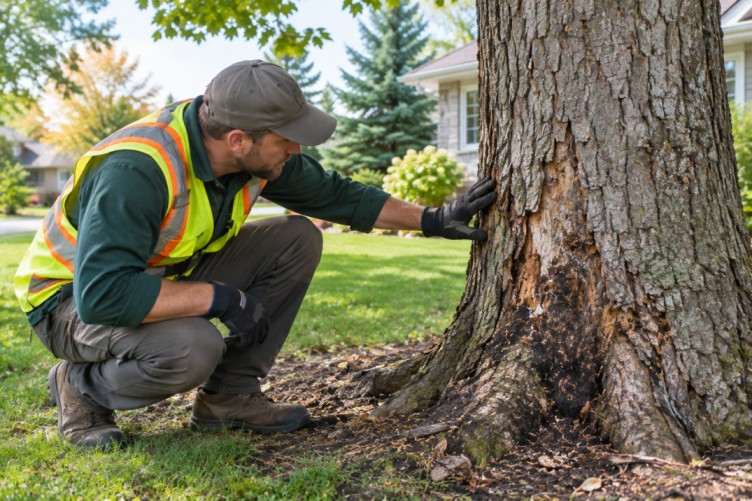
Here’s a simple approach if you suspect root rot on your property:
- Look for the signs described above. Start at the base of the tree and work outward.
- Avoid disturbing the area around the base until it’s been assessed, since heavy foot traffic or digging can worsen root stress.
- Book a professional assessment rather than guessing. Root rot can be difficult to judge accurately without training.
- Follow the arborist’s recommendation on whether removal, monitoring, or stump grinding is the right next step. If the tree does need to come down, it’s worth understanding why leaving a tree stump in the ground causes problems before deciding on full removal.
Serving Fredericton and Surrounding Areas
At Ideal Tree Service, our certified arborists provide thorough on-site assessments across Fredericton and surrounding communities, including Oromocto, Marysville, and Hanwell. If root rot has compromised a tree on your property, we’ll walk you through your safest options, including professional, fully insured tree removal. Some removals may require approval under local regulations, so it’s worth reviewing our guide on the tree removal permit process in Fredericton beforehand, so you can protect your property before a storm makes the decision for you. Once a tree is removed, we also offer stump grinding to fully clear the area and leave your yard ready for whatever comes next.
Notice signs of root rot on your property? Contact Ideal Tree Service for a free assessment and expert tree removal in Fredericton.
Frequently Asked Questions
How long does it take for root rot to kill a tree?
It varies widely depending on the tree species, the type of fungus involved, and environmental conditions. Some trees decline over several years, while others can fail suddenly even while still showing green leaves. In our experience, hardwoods affected by Armillaria in this region can go from “looks fine” to “needs emergency removal” within a single wet season. This unpredictability is exactly why professional assessment matters more than just watching and waiting.
Can root rot spread to other trees in my yard?
Yes, in many cases. Armillaria and similar root rot fungi spread through direct root-to-root contact or through fungal threads in the soil, which means nearby trees, especially those of the same species, can be at risk too. If one tree tests positive, we typically recommend checking neighbouring trees within the same root zone.
Is it safe to remove a tree with root rot myself?
No. Trees with root rot are unpredictable because the root system holding them upright is already compromised. Cuts, wind, or even the weight of climbing equipment can cause an unexpected fall. This type of removal should always be handled by trained, insured professionals with the right rigging equipment and WorkSafe NB coverage.
Will cutting down the tree get rid of the root rot fungus in my soil?
Not entirely. Removing the tree stops that specific tree from becoming a hazard, but rot fungi can persist in leftover roots and stumps in the soil for years. Full stump grinding and, in some cases, root excavation help reduce the chances of the fungus affecting future plantings in the same spot.
How much does it cost to remove a tree with root rot in Fredericton?
Costs depend on the tree’s size, location, accessibility, and how much of the root system needs to be addressed afterward, such as stump grinding. For a general sense of pricing factors, take a look at our tree removal cost guide, though every situation is different, so we provide an accurate quote only after an on-site assessment.
Can I plant a new tree in the same spot after removing one with root rot?
It’s possible, but not always advisable right away. If the fungus is still active in the soil, a new tree of a susceptible species could be at risk too. An arborist can advise on soil treatment, species selection, or a better planting location to avoid a repeat problem.