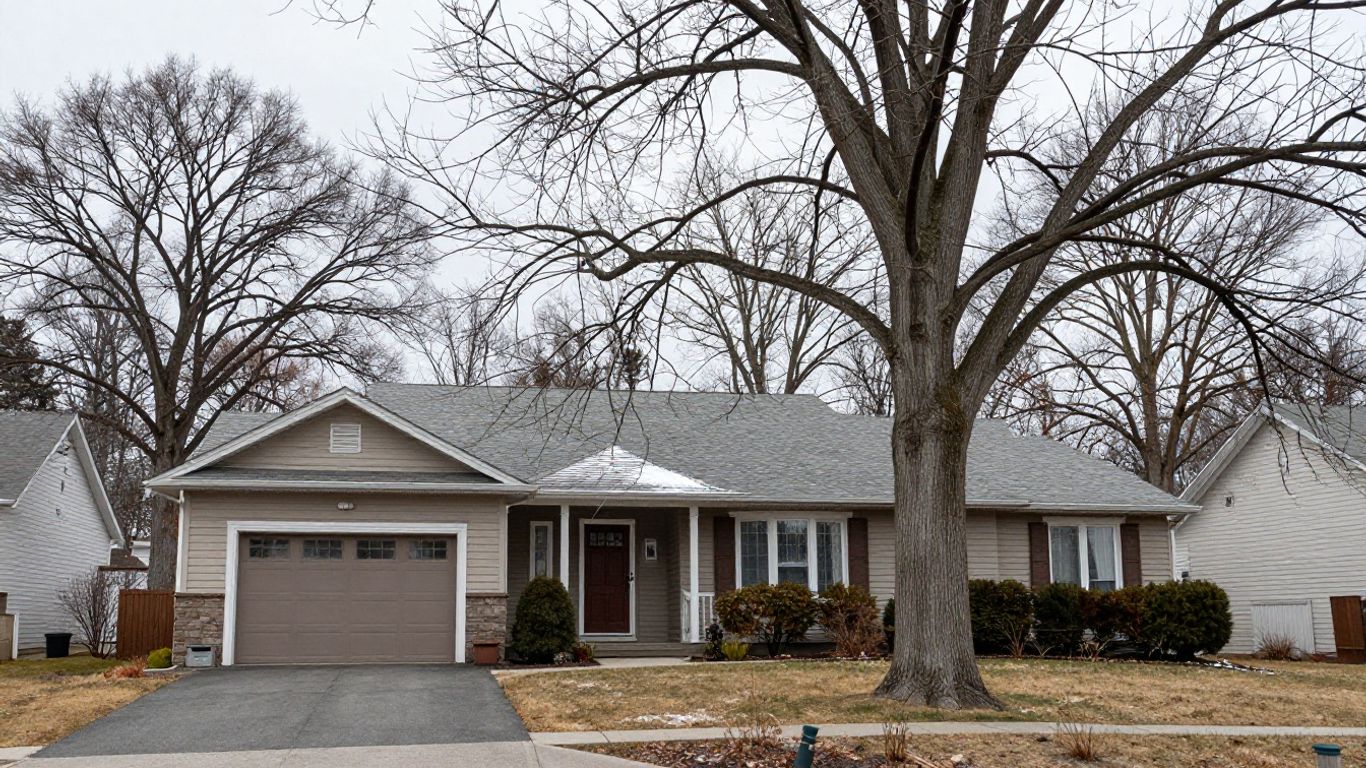
Every year, we get called out after the first heavy wet snowfall to look at a branch or tree that “came out of nowhere.” Almost every time, the tree had been showing signs for months, a crack that was there in August, a lean that had been getting worse since spring, a patch of fungus nobody thought twice about. Snow and ice don’t create weakness in a tree. They just find it.
At Ideal Tree Service, a fall walk-around is one of the simplest things a homeowner in Fredericton can do to get ahead of winter damage. This guide covers what to look for from the ground, which signs mean it’s time to call in a professional, and what actually happens during a tree risk assessment.
Key Takeaways
A careful fall inspection can reveal weak tree signs before winter snow and ice add dangerous weight. You can identify many warning signs from the ground, but serious defects need a qualified assessment.
- Look for dead branches, trunk cracks, cavities, decay, and unusual lean.
- Snow and ice can turn a manageable defect into sudden tree failure.
- Pay special attention to trees near homes, driveways, vehicles, and power lines.
- Do not climb, cut, or pull on questionable branches yourself.
- Arrange a professional tree risk assessment when damage, decay, or movement is significant.
Quick Answer: Signs a Tree Is Weak Before Winter
The clearest weak tree signs before winter include dead or hanging branches, deep cracks in the trunk, fungal growth, hollow areas, exposed or damaged roots, and a sudden lean. You may also notice sparse growth, premature leaf loss, peeling bark, or branches joined to the trunk with sharp, narrow angles. None of these signs proves a tree will fail, but each deserves attention before snow arrives.
Winter weather adds weight and movement to defects that may seem stable in autumn. A branch with a partial break can hold through calm weather and then snap after a wet snowfall. Likewise, a tree with damaged roots may remain upright until frozen ground, wind, and a saturated snow load test its balance.
Start with what you can safely see from the ground. If the tree is beside a structure, roadway, sidewalk, or utility line, or if you see fresh cracking, soil lifting, or a hanging limb, keep people away and arrange professional help rather than attempting a quick trim.
Why Snow Load Turns a Weak Tree Into a Hazard
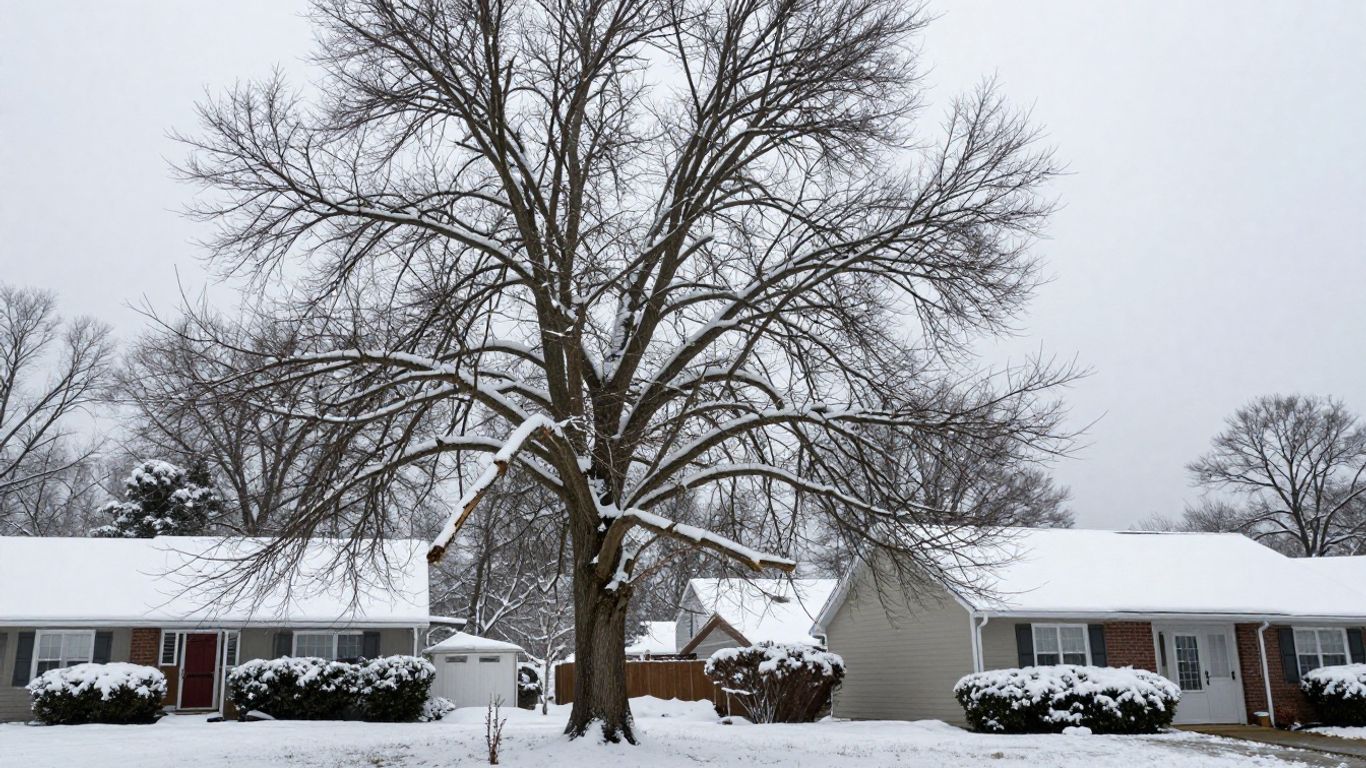
Snow load tree damage happens because accumulated snow increases the force carried by branches, stems, and unions. Wet snow is especially heavy, and repeated storms can build a thick layer before earlier snow has shed. Wind then shifts that weight and adds pulling force, which can expose weaknesses that were not obvious on a dry fall day. For related winter property needs, professional snow removal in Fredericton can also help reduce accumulated snow around your property.
A healthy tree can often flex and distribute pressure. A decayed branch, split stem, or poorly attached limb has less reserve. Small defects can become serious hazards when weight, freezing temperatures, and gusts act on them together.
The location of the tree determines how urgent the problem is. A weak branch over an open lawn may cause limited damage, while the same branch over a roof or parked vehicle creates a much narrower margin for error. Early inspection gives you time to choose a measured response instead of reacting during a storm.
Visual Signs of a Weak or Dying Tree
Your first inspection should focus on visible changes in bark, branches, foliage, and the ground around the trunk. Some symptoms are seasonal, so compare what you see with the tree’s normal appearance and with nearby trees of the same type. The more warning signs that appear together, the more cautious you should be.
Cracks, Splits, and Included Bark
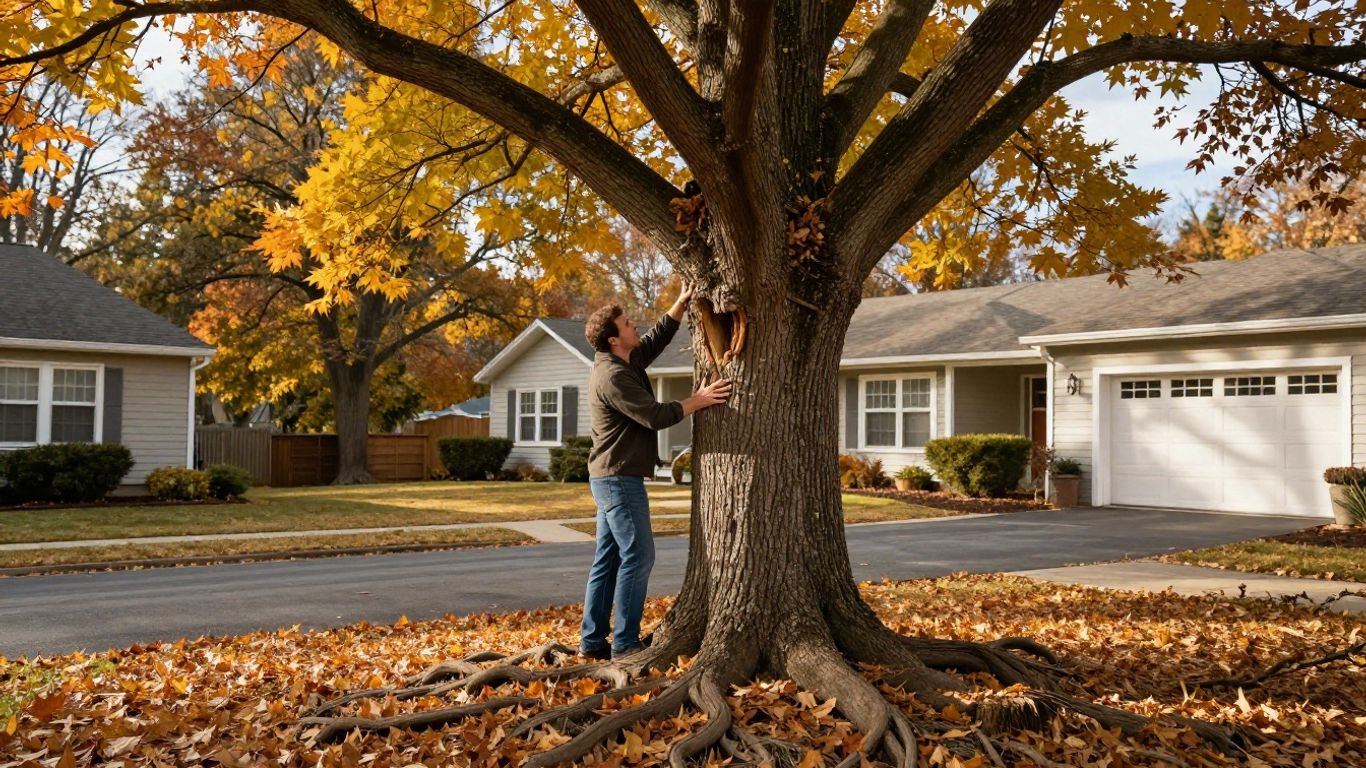
Look for vertical cracks in the trunk, open splits at branch unions, and bark that has separated from the wood. A crack that runs through a major stem can allow water to enter and freeze, gradually widening the defect. Included bark, meaning bark trapped between two closely V-shaped stems, can signal a weaker union because the stems may not be well connected.
Fresh saw cuts, torn branches, and long seams deserve special attention after storms. Do not fill a cavity or bolt a split branch without an expert diagnosis; those actions can hide the problem or create new stress. If a crack is widening, has fresh exposed wood, or sits above a target, treat it as a reason to limit access below the tree.
Fungus, Cavities, and Deadwood
Mushrooms or shelf-like fungal growth on the trunk or root flare may indicate decay, although only an assessment can determine how much sound wood remains. Cavities, soft spots, loose bark, and visible insect galleries are also worth recording. Decay can be internal, so an apparently leafy crown does not always mean the structure is sound.
Deadwood is another practical warning sign. Look for bare branches that remain attached, broken tips, hanging limbs, and unusually thin twigs. If timing a fix is part of your plan, our guide to pruning before winter covers when it’s safe to remove that kind of deadwood yourself versus when it needs a professional.
Structural Red Flags: Lean, Roots, and Weak Branch Unions
A tree that has always grown with a gentle lean is different from one that has recently tilted. Look for fresh soil cracks, lifted roots, a disturbed root flare, or a canopy that has shifted in relation to the trunk. Sudden movement is more concerning than a stable shape, particularly after saturated soil or strong winds.
Roots can be damaged by construction, trenching, grading, vehicles, and repeated soil compaction. You may see dead bark at the base, exposed roots, fungal growth, or a shallow depression on one side. Avoid piling soil or mulch against the trunk, since doing so can conceal changes and keep the root flare too wet.
Branch unions deserve a close look as well. Two stems forming a tight V, especially with included bark or a crack between them, may carry more failure risk than a broad U-shaped union. The overall pattern matters: lean, decay, root disturbance, and weak unions together call for an assessment rather than a guess.
Where Weak Trees Cause the Most Damage (Near Homes, Driveways, and Power Lines)
The same structural defect has different consequences depending on what lies beneath it. Before winter, walk the property boundary and identify roofs, sheds, play areas, parked cars, fences, sidewalks, and utility lines within the tree’s possible fall zone. A tree does not need to be especially large to cause expensive damage when it stands close to a target.
Driveways and parking areas deserve attention because vehicles may be present when a storm arrives. Trees beside sidewalks can also create risks for pedestrians and may involve municipal requirements. If a tree is near public infrastructure in Fredericton, our tree removal permit guide explains when the City needs to be involved before any removal work goes ahead.
Do not work near energized lines or assume a branch will fall in the direction you expect. Keep children and pets away from the area, and use a qualified professional for pruning or removal where access, height, or electrical hazards are involved. If the tree is actively failing rather than just weakened, our emergency tree removal service is built for exactly that situation.
Species and Location Factors That Increase Snow Load Risk
Species, age, form, and growing conditions all affect how a tree handles snow. Some trees naturally hold more snow because of dense evergreen foliage or broad, horizontal branches. Others may be poorly adapted to a particular exposure, soil condition, or planting space even if they are common in the area.
Location changes the picture too. A tree sheltered by buildings may receive less wind but can still collect heavy snow, while one at the edge of a yard may experience stronger gusts. Soil that stays wet, shallow rooting space, recent construction, and competition for light can reduce a tree’s structural reserve.
The following guide is a useful starting point, not a pass-or-fail rating:
| Factor | What to observe | Why it matters |
|---|---|---|
| Crown form | Dense, broad, or uneven canopy | More surface area can catch snow and create uneven loading |
| Exposure | Open edge, wind corridor, or sheltered yard | Wind can shift snow and increase bending force |
| Rooting space | Compacted, shallow, or disturbed soil | Limited roots may reduce stability and water access |
| Tree condition | Decay, deadwood, sparse growth, or injury | Existing weakness leaves less capacity for storm stress |
After considering these factors, compare the tree with healthy nearby specimens rather than judging it by species alone. Existing hazardous trees still require an individual, on-site evaluation rather than a general rule based on species alone.
DIY Checklist: How to Inspect Your Tree Before Winter
A ground-level inspection is a sensible first step on a calm, dry day. Bring a notebook or phone so you can record the tree’s location, take photographs from a safe distance, and compare changes after a storm. Do not climb the tree, use a ladder, or tug on hanging limbs to test them.
Work through a short sequence so you do not focus only on the most obvious branch:
- Scan the crown for dead, broken, hanging, or unusually sparse branches.
- Inspect the trunk for cracks, cavities, peeling bark, and fungal growth.
- Check the root flare and surrounding soil for lifting, exposed roots, or fresh disturbance.
- Look for a new lean, shifted canopy, or weak V-shaped branch unions.
- Identify anything within the likely fall zone, including buildings and utility lines.
Once you finish, rank the findings by both severity and target. A dead branch over an empty back corner may be less urgent than a smaller cracked limb over your front steps. If you cannot tell whether a defect is active, leave the area undisturbed and ask for an assessment.
When These Signs Mean You Need a Professional Risk Assessment
Professional help is appropriate when the tree shows multiple warning signs, when a defect is high in the crown, or when the likely fall zone includes people or property. It is also wise after a major storm, construction near roots, a sudden lean, or a large branch failure. A ground inspection can identify concerns, but it cannot reliably measure internal decay or the strength of a high branch union.
Many professional assessments, including ours, follow structured frameworks such as the International Society of Arboriculture’s Tree Risk Assessment Qualification (TRAQ) methodology, which standardizes how defects, likelihood of failure, and potential consequences are evaluated rather than relying on a visual guess alone. A qualified assessor should explain the observed defect, the level of concern, and practical options rather than pushing you toward an automatic removal.
Do not wait for a dramatic symptom if the tree is in a high-consequence location. If you see movement at the roots, an open trunk split, a large hanging limb, or contact with power lines, keep clear and arrange qualified assistance promptly.
What Happens During a Tree Risk Assessment in Fredericton
A tree risk assessment usually begins with a discussion of the tree’s history, recent storms, visible changes, and the people or property that could be affected. The assessor then examines the trunk, root flare, major branches, unions, and surrounding site conditions. The work should be methodical and explained in plain language, not just a quick glance and a quote.
The assessor may identify defects that are visible from the ground and may use additional tools or closer inspection when appropriate. The final recommendation can range from monitoring and routine care to pruning, cabling or other management, further testing, or removal. The suitable response depends on the tree’s condition, location, and likely consequences of failure.
Ask for the findings in writing, including photographs when useful, recommended timing, and any limits on the inspection. If removal is proposed near public property or infrastructure, confirm whether a permit or city approval applies before work begins.
Does Home Insurance Cover Damage From a Weak Tree?
Home insurance coverage depends on your policy, the cause of the damage, and whether the tree fell on an insured structure or caused another covered loss. A storm-related event may be treated differently from damage linked to neglect, rot, or a known unrepaired condition. Your deductible and limits can also affect the practical outcome.
Do not assume that insurance will pay for preventive removal simply because a tree looks weak. Coverage for cleanup, debris, landscaping, neighbouring property, and temporary repairs may vary. The safest approach is to read your policy and speak with your insurer before a loss, while documenting the tree’s condition and any professional recommendations, ideally with the kind of written assessment report described above.
If damage occurs, photograph the scene from a safe distance, prevent further access to the hazard, and contact your insurer promptly. Avoid making permanent repairs before the insurer explains its documentation requirements, unless immediate action is needed to prevent further harm.
What to Do If Your Tree Is Confirmed Weak or Hazardous
Follow the written recommendations and timing provided by the assessor. Some trees can be managed through pruning, monitoring, or corrective work; others have defects that make removal the more responsible option. If the recommendation is not clear, ask what could change the risk and what signs should trigger an earlier return visit.
Until the work is complete, keep people, vehicles, and outdoor equipment out of the fall zone. Mark the area for household members, avoid parking below suspect limbs, and do not attempt emergency cutting with a chainsaw unless you are trained and the site is safe. Work near utility lines should be left to properly qualified crews.
If removal turns out to be the right call, plan for the stump as part of the same job rather than a separate one later; our stump grinding service is usually easiest to schedule right after removal while the crew and equipment are already on site. Plan any replacement planting only after the hazard is addressed and the site is suitable, choosing a species and mature size that fit the available soil, light, and infrastructure.
Conclusion
A fall walk around your property can reveal weak tree signs before winter, but visible clues are only the beginning. Treat cracks, decay, deadwood, root movement, and sudden lean seriously, especially when a tree stands near a home, driveway, sidewalk, or utility line, and arrange qualified help before snow turns a manageable concern into an emergency.
If you’d rather have a trained eye look before the first storm hits, Ideal Tree Service offers free assessments across Fredericton, Oromocto, Marysville, and Hanwell. You can also reach our team directly if you’d prefer to talk through what you’re seeing first.
Frequently Asked Questions
Can a weak tree be saved, or does it need to come down?
Sometimes a tree can be retained with pruning, monitoring, or other management, but the answer depends on the defect, remaining sound wood, root condition, species, and targets nearby. A professional assessment is the best way to distinguish a treatable problem from an unacceptable risk.
How much snow does it take to damage a tree?
There is no single safe amount. Wet snow, wind, tree form, branch condition, temperature, and previous accumulation all matter. A small amount can damage a tree that already has a crack, decay, weak union, or root instability.
How much does a tree risk assessment cost in Fredericton?
Pricing varies with the number and size of trees, site access, travel, report detail, and whether additional testing is needed. Request a written estimate that explains what is included rather than comparing prices without comparing the scope of work.
What are the first weak tree signs before winter?
Start with dead or hanging branches, trunk cracks, cavities, fungal growth, root disturbance, and a new lean. Several signs together deserve more attention than any single minor symptom.
Can healthy-looking trees still fail under snow?
Yes. Internal decay, weak unions, root damage, or hidden cracks may not be obvious from a distance. Heavy wet snow and wind can expose defects that were already present.
Should you remove snow from tree branches?
Avoid shaking or striking branches, since that can break brittle wood or disturb a weak union. If snow is creating an immediate hazard, keep people away and contact a qualified professional.
Is a leaning tree always dangerous?
No. Some trees develop a stable lean over many years. A sudden lean, fresh soil movement, exposed roots, or cracking is more concerning and should be professionally evaluated.
Can pruning prevent snow load tree damage?
Proper pruning can reduce some hazards by removing dead or damaged wood and improving structure, but it cannot correct every defect. Poor pruning can increase stress, so significant work should be planned by someone qualified, such as our tree trimming and pruning team.
What should you do after a branch breaks in winter?
Keep clear of the branch and any remaining suspended wood, especially if utility lines are nearby. Photograph the damage from a safe position and arrange professional inspection before cutting or cleanup.
How often should you inspect trees near your home?
Inspect them at least seasonally and after major storms, while watching for changes between inspections. Trees with known defects, recent construction damage, or high-value targets may need a more specific monitoring schedule.