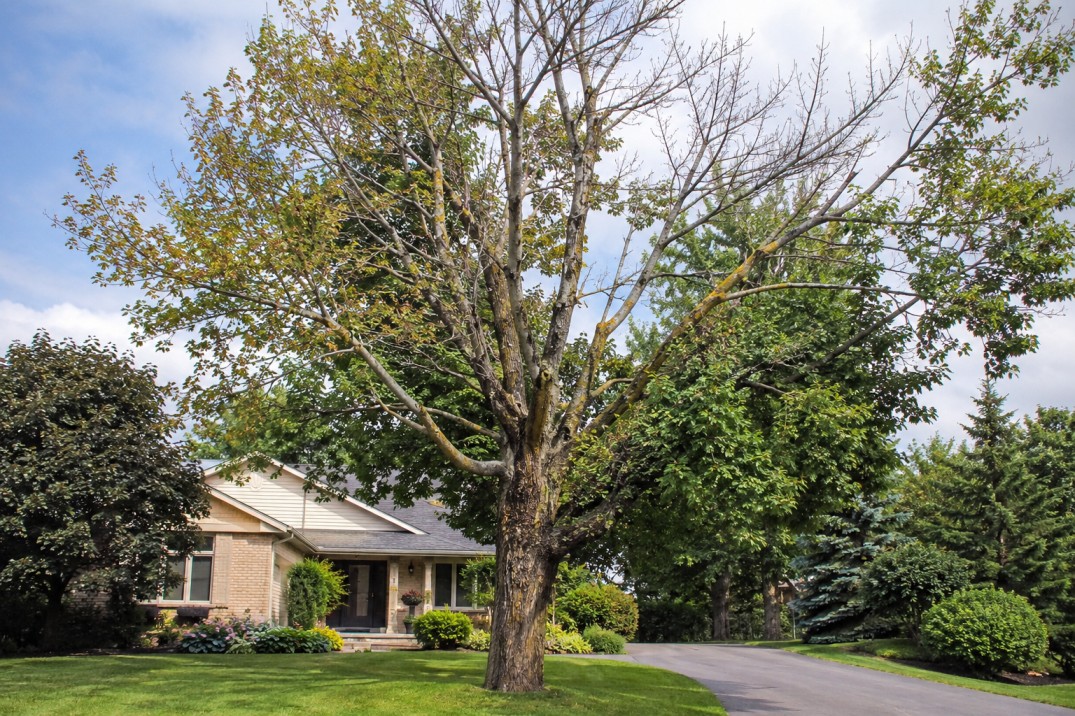
If you’ve noticed peeling bark, thinning leaves, dead branches, or fungal growth around a tree on your Fredericton property, you may be wondering whether the tree is diseased and whether removal is necessary.
A diseased tree does not automatically need to be removed. Some problems can be managed through pruning, treatment, or monitoring. The bigger concern is whether disease, decay, or structural damage has affected the tree’s stability and created a safety risk.
This guide explains common tree health concerns in Fredericton, signs that deserve attention, when a diseased tree may need removal, and when a professional assessment can help you make the right decision.
What Causes Tree Diseases in Fredericton?
Tree health problems can have several causes, and disease is only one possibility. Weather stress, insects, root disturbance, poor growing conditions, physical damage, and fungal activity can all contribute to tree decline. Identifying the underlying cause is important because the appropriate response can be different from one tree to another.
Fredericton’s urban forest includes a wide range of tree species across residential properties, streets, parks, and green spaces. Local trees can be affected by disease, insects, environmental stress, root damage, weather, and physical injuries.
The City of Fredericton manages its urban forest using an Integrated Pest Management approach and references International Society of Arboriculture guidelines in its tree-management work. Its Tree Management By-law also addresses tree injuries, insect infestations, disease, pruning, removal, and replacement. City of Fredericton’s Tree Management information
For homeowners, this local context matters because a tree’s species, location, condition, and proximity to structures can all affect how a disease problem should be handled.
Common Tree Diseases and Pests to Watch For
Different tree species can experience different diseases and pest problems. In Fredericton, homeowners may encounter issues affecting ash, elm, maple, spruce, and other commonly planted or naturally occurring trees. Recognizing the general signs can help you decide when a closer assessment is warranted.
Emerald Ash Borer (EAB) is an important concern for ash trees in New Brunswick. Infestation can cause canopy decline, branch dieback, and progressive tree deterioration. Because symptoms can overlap with other causes of ash decline, visible signs should be assessed in context rather than treated as proof of EAB.
The City of Fredericton has documented EAB within the city and has implemented management measures for affected ash trees.
Root rot and fungal decay can affect trees when roots or lower trunk areas deteriorate. Poor drainage, root disturbance, injuries, and other forms of stress can contribute to tree decline. Fungal growth around the base of a tree can be a reason to investigate further, although its presence alone does not establish the extent of internal decay.
Dutch elm disease can affect elm trees and cause wilting, yellowing foliage, and progressive branch dieback. Because early symptoms can resemble other forms of stress, confirmation is important before deciding whether removal is necessary.
Canker diseases can produce sunken or discoloured areas on branches and trunks and may contribute to branch dieback. Stressed or injured trees can be more susceptible to some diseases, so the overall condition of the tree should be considered rather than focusing on one symptom.
Signs of a Diseased Tree
Early symptoms can sometimes be managed before they develop into a larger tree health or safety concern. However, visible symptoms do not always reveal what is happening inside the trunk or below the soil, so several signs should be considered together.
Visual and Structural Warning Signs
The most useful warning signs are changes from the tree’s normal appearance or structure. Pay attention to the canopy, branches, bark, trunk, root area, and any changes in the tree’s position.
Look for:
- Leaves that are discoloured, undersized, or dropping outside normal seasonal patterns
- Bark that is cracked, peeling, or missing in patches
- Sunken or darkened areas on the trunk or branches
- Mushrooms or fungal growth around the base of the trunk or exposed roots
- Dead or brittle branches concentrated in one part of the canopy
- Noticeable crown dieback
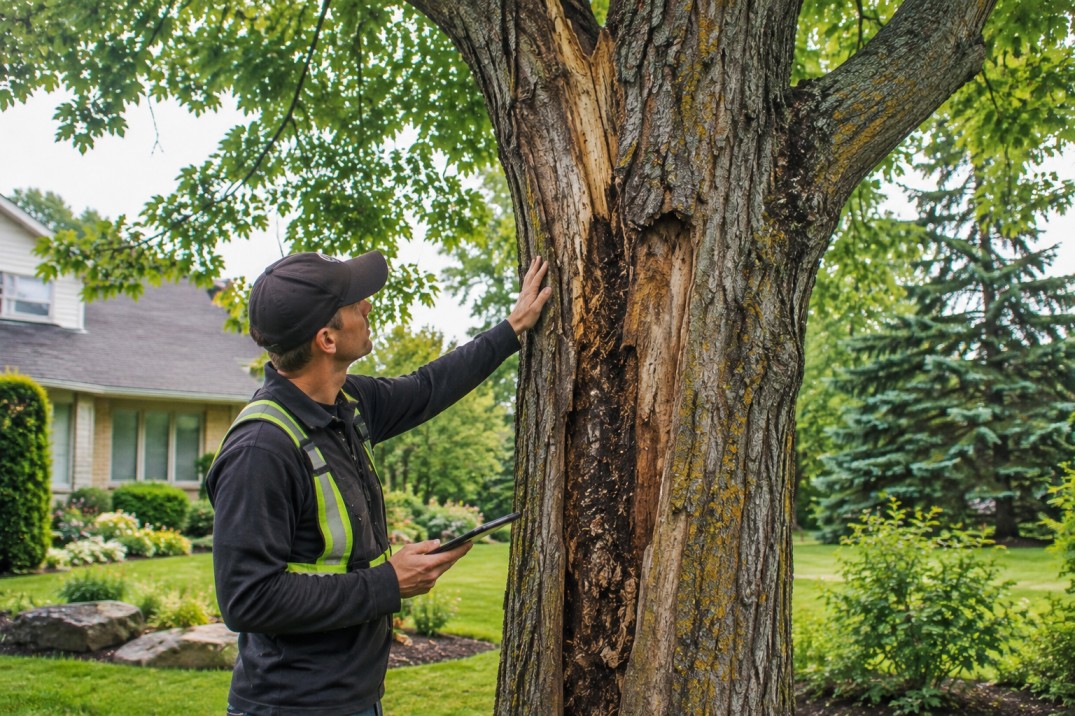
- Cracks, cavities, or damaged areas in the trunk
- A new or increasing lean
One symptom by itself does not necessarily mean a tree is beyond saving. Several warning signs occurring together, particularly when they involve the trunk, roots, or major branches, deserve closer attention.
When to Remove a Diseased Tree vs. When It Can Be Treated
The presence of disease does not automatically mean that a tree should be removed. The decision depends on the severity of the problem, the tree’s structural condition, its location, and whether the underlying issue can be managed safely.
When Treatment or Pruning May Be Appropriate
Some trees can remain in place when the problem is limited and the tree’s main structure remains sound. Depending on the situation, appropriate pruning, monitoring, or other professional tree-care measures may help manage the problem.
If affected branches can be safely managed and the main trunk and root system remain structurally sound, removal may not be necessary.
We recommend avoiding a removal decision based on appearance alone. A tree that looks unhealthy may still be structurally manageable, while a tree with limited visible symptoms can sometimes have more serious internal problems.
When appropriate, pruning or trimming may help remove affected or hazardous branches and maintain the tree’s structure.
When Removal May Be the Safer Option
Removal becomes a stronger consideration when disease or decay is associated with significant structural deterioration. Problems affecting the trunk, major limbs, roots, or overall stability can create risks that pruning alone may not resolve.
Removal may be the safer option when decay has reached the trunk or root system, a significant portion of the canopy has died, or the tree has developed serious structural defects.
Location also matters. A compromised tree beside a home, driveway, walkway, fence, or other frequently used area can create greater consequences if a branch or the tree itself fails.
In situations where removal is necessary, tree removal in Fredericton can address a tree that has become an unacceptable safety risk.
Safety Risks of Leaving a Diseased or Hazardous Tree Standing
A tree can remain standing even after its structural condition has begun to deteriorate. The concern is that weakened branches, trunks, or roots may become less capable of handling wind, snow, ice, or other loads.
Potential Property and Safety Risks
The consequences of tree failure depend heavily on what is located beneath or around the tree. A weakened tree beside a house or driveway presents a different level of concern than one located in an open part of a large property.
Potential risks include:
- Falling limbs damaging a house, vehicle, fence, or other property
- Tree failure affecting driveways, walkways, or landscaped areas
- Root instability contributing to tree movement or failure
- Increased risk during high winds, heavy rain, ice, or snow
- Damage to nearby property if a hazardous tree fails
Fredericton experiences seasonal weather conditions that can place additional loads on trees. A tree with existing structural defects may respond differently to strong winds or heavy snow than a healthy tree.
For that reason, significant cracks, major deadwood, extensive decay, or root damage should not be ignored simply because the tree is still standing.
Professional Tree Health Assessment in Fredericton
When disease symptoms are accompanied by decay, deadwood, leaning, cracks, or other structural concerns, guessing from the ground can be difficult. A professional assessment provides a more informed basis for deciding whether the tree should be retained, managed, or removed.
A proper assessment considers the tree’s overall health, trunk condition, branches, root area, lean, defects, surrounding structures, and the potential consequences of failure.
Our tree risk assessment service can help property owners understand the condition of a potentially hazardous or declining tree before making a removal decision.
An assessment can help determine whether the appropriate next step is pruning, continued monitoring, further evaluation, or removal.
Our Diseased Tree Removal Process
Tree removal should begin with understanding the condition of the tree and the surrounding site. A proper plan considers the tree itself as well as structures, access, landscaping, utilities, and other potential hazards.
On-Site Inspection and Removal Planning
Before removal, the work area should be assessed to identify potential hazards and determine the safest approach. Tree size, condition, lean, access, surrounding structures, and the location of branches all influence how the work should be planned.
Fredericton’s Tree Management By-law includes provisions relating to tree injury, disease, insect infestation, pruning, and removal. It also addresses certain trees on private property when they affect municipal operations.
Homeowners should confirm whether the by-law applies to their particular situation before arranging work. For current information, review the City of Fredericton’s Tree Management information.
Safe Removal, Stump Grinding and Site Cleanup
Once removal is considered appropriate, the method should match the tree and property conditions. Trees in confined areas may require controlled cutting and sectional removal to help protect surrounding structures and landscaping.
If the stump also needs to be removed, our stump grinding service can help clear the remaining stump and prepare the area for future use.
Complete cleanup is also an important part of the job. Branches, logs, and other debris should be removed from the work area once the tree has been taken down.
If a diseased or damaged tree has already fallen or presents an immediate safety concern, our emergency tree removal service can help address the situation.
Why Choose Ideal Tree Service for Diseased Tree Removal?
Choosing a tree service for a diseased or declining tree involves more than finding someone who can cut it down. Homeowners should consider whether the company understands the difference between a tree that needs removal and one that may still be safely managed.
Ideal Tree Service provides tree care services for homeowners in Fredericton and surrounding communities, with services covering removal, pruning, stump removal, and emergency tree situations.
Our approach is focused on assessing the situation first and determining whether removal is actually necessary. When a tree can reasonably be retained through appropriate tree care, removal should not be the automatic recommendation.
When removal is necessary, proper planning helps reduce potential risks to people and property.
Need Help With a Diseased Tree in Fredericton?
A diseased tree does not always need to be removed, but signs of decay, structural weakness, significant dieback, or root problems should not be ignored. Understanding the condition early can help you make a more informed decision about the next step.
If you’re unsure whether your tree can be safely retained, Ideal Tree Service can assess the situation and explain the available options. Where removal is necessary, the work can be planned around nearby structures, access points, landscaping, and other site conditions.
Request a free estimate to discuss your diseased or potentially hazardous tree with Ideal Tree Service.
Frequently Asked Questions
How Do I Know If My Tree Is Dead or Just Dormant?
A tree can naturally lose its leaves or appear inactive during its normal dormant season without being dead. Other signs, such as brittle branches, extensive dieback, damaged bark, or a lack of living tissue, can indicate more serious decline.
A simple scratch test can sometimes provide an initial indication of living tissue on a small branch, but it is not a complete assessment of tree health or structural safety. If you are unsure about the condition of a tree, a professional assessment is a better option.
Can a Diseased Tree Spread Disease to Other Trees on My Property?
Some diseases and pests can spread between susceptible trees. The risk depends on the specific disease, tree species, proximity of other trees, and environmental conditions.
For example, Emerald Ash Borer affects ash trees, while Dutch elm disease affects elm trees. New Brunswick monitors forest pests and diseases, including Emerald Ash Borer and other species of concern.
If you suspect an infectious disease or invasive pest, nearby trees of the same species may also deserve attention.
Do I Need a Permit to Remove a Diseased Tree in Fredericton?
The requirements depend on the tree, property, and circumstances involved. Fredericton’s Tree Management By-law addresses various situations involving tree management, including disease, insect infestation, pruning, and removal.
Homeowners should confirm the current requirements that apply to their specific property before arranging removal.
How Much Does Diseased or Dead Tree Removal Cost in Fredericton?
There is no single price that applies to every tree. Size, condition, accessibility, nearby structures, equipment requirements, and cleanup can all affect the amount of work involved.
A site-specific estimate provides a more accurate understanding of the work involved.
Does Every Diseased Tree Need to Be Removed?
No. Disease alone does not automatically mean that a tree needs to be removed.
The decision should consider the severity of the problem, structural condition, tree location, potential targets, and whether the problem can be reasonably managed.
When Should I Call a Professional About a Diseased Tree?
Professional assessment is worth considering when you notice significant dead branches, progressive dieback, trunk decay, major cracks, cavities, root damage, fungal growth, or changes in the tree’s stability.
Trees located close to homes, driveways, walkways, vehicles, or other frequently used areas deserve particular attention when structural problems are present.